
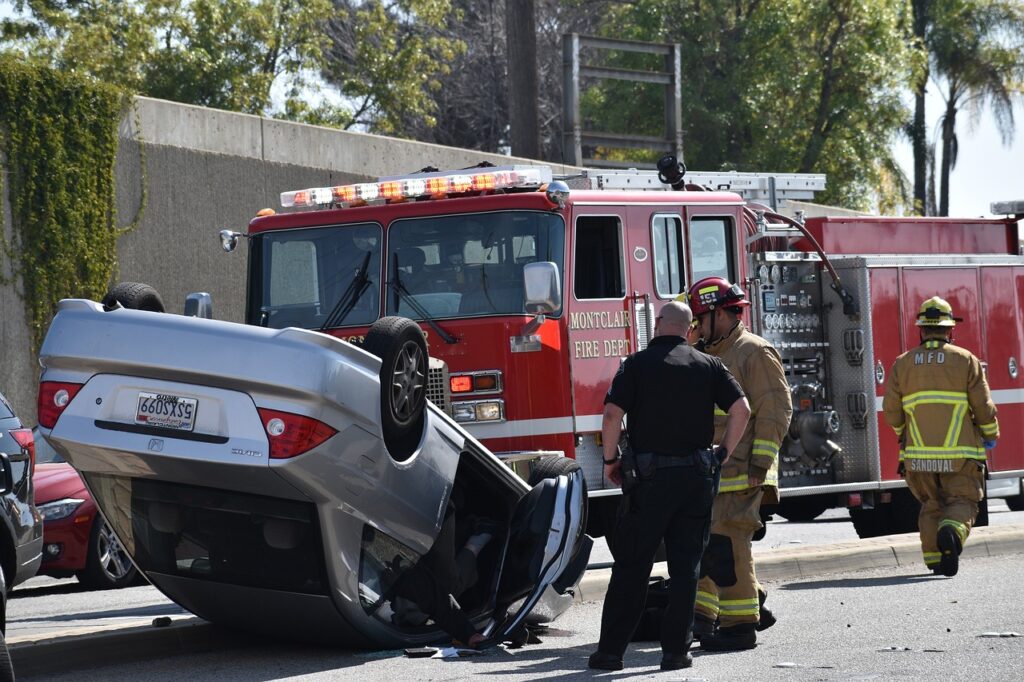
Car accidents create instant confusion about legal representation needs. The moments following a collision involve critical decisions that impact financial recovery and medical care options. Not every fender-bender requires an attorney, yet underestimating serious accidents can lead to substantial losses. Insurance companies prioritize their bottom line, not victim compensation. Understanding when professional legal guidance becomes necessary protects accident victims from potentially devastating consequences during an already challenging time.
Severity of Injuries: When Medical Complications Require Legal Support
The severity of injuries sustained in a car accident often serves as the primary indicator for seeking legal representation. When injuries require extensive medical treatment, hospitalization, or long-term care, the financial implications can be substantial. Victims suffering from traumatic brain injuries, spinal damage, or multiple fractures typically face complex recovery paths that necessitate legal safeguarding.
Individuals with preexisting conditions may experience additional complications as insurance companies often attempt to attribute new injuries to previous health issues. In addition, rehabilitation obstacles can extend beyond physical recovery to include lost wages, diminished earning capacity, and psychological trauma.
Legal counsel becomes particularly essential when injuries evolve over time, revealing complications not immediately apparent after the accident. An experienced attorney can guarantee compensation calculations incorporate future medical needs and rehabilitation challenges that might otherwise be overlooked.
Disputed Liability: Handling Cases Where Fault Is Contested
Insurance companies often dispute liability after accidents, with each party’s insurer attempting to minimize their client’s responsibility. Thorough evidence collection—including photographs, witness statements, police reports, and vehicle damage documentation—provides critical leverage during these disputes. Individuals facing contested fault scenarios should prioritize preserving all accident-related evidence and consider legal representation to counter insurance company tactics designed to shift blame.
When Insurance Companies Disagree
Why do accident claims become drastically more complex when insurance companies disagree about who bears responsibility? Fundamentally, insurers have financial incentives to minimize payouts, often resulting in unsettled claims that leave victims in prolonged financial uncertainty.
When adjusters from opposing insurance companies review conflicting accounts of the same accident, each typically interprets evidence to benefit their policyholder. This standoff can lead to claim denials, lowball settlement offers, or finger-pointing that delays compensation for months or years.
An experienced attorney becomes invaluable in these situations by independently investigating the accident, gathering evidence that substantiates fault, and negotiating directly with both insurers. Legal representation greatly improves the likelihood of fair resolution when insurance companies reach an impasse through either strategic negotiation or litigation when necessary.
Evidence Collection Matters
When fault becomes contested after a car accident, evidence collection emerges as the cornerstone of successfully resolving disputed liability cases. Insurance companies often reject claims where responsibility isn’t clearly established, making proper documentation critical.
Effective evidence collection begins immediately post-accident with thorough photo documentation of vehicle damage, road conditions, and visible injuries. Document preservation becomes essential—maintaining medical records, repair estimates, and police reports creates a compelling factual foundation. Witness statements provide independent verification that can tip disputed cases in the victim’s favor.
Most disputed liability cases benefit from legal representation because attorneys understand which evidence carries the most weight. They can secure traffic camera footage, analyze skid marks, and reconstruct accidents using expert testimony—evidence collection techniques that typically exceed the capabilities of individuals representing themselves in contentious claims.
Insurance Company Tactics: Recognizing Bad Faith Practices
Many car accident victims are surprised to discover that their own insurance company may not always act in their best interest, despite contractual obligations to do so. Insurance adjusters may employ tactics designed to minimize payouts, including unreasonable delays, dismissing legitimate claims without proper investigation, or pressuring claimants to accept lowball offers.
During settlement negotiation tactics, adjusters might misrepresent policy provisions, withhold critical information about coverage, or refuse to provide justification for denied claims. These practices constitute bad faith when they deliberately subvert fair claim processing. Victims should document all communications, request explanations in writing, and watch for excessive delays or contradictory statements. When insurance adjuster conduct includes intimidation, misrepresentation, or unjustified denial, these red flags indicate it may be time to consult with an attorney specialized in insurance bad faith litigation.

Multiple Party Accidents: Navigating Complex Claims
Multiple party accidents introduce layers of complexity as each involved driver may attribute fault to others, creating murky liability determinations that require detailed accident reconstruction. Insurance companies often complicate these scenarios by disputing coverage limits, denying claims outright, or attempting to minimize their client’s proportional responsibility. Establishing the exact percentage of fault becomes critical in states with comparative negligence laws, where compensation amounts directly correlate with each party’s assigned degree of responsibility.
Liability Becomes Murky
Car accidents involving several vehicles frequently transform straightforward insurance claims into complex liability puzzles. When multiple drivers contribute varying degrees of negligence, determining who bears responsibility becomes exceptionally difficult. Insurance companies often dispute their policyholder’s percentage of fault to minimize payouts.
Several unclear liability factors can complicate these cases, including contradictory witness statements, inadequate police reports, and differing accounts from involved parties. Ambiguous responsibility determinations may arise when weather conditions, road design flaws, or vehicle defects potentially contributed to the collision. Attorneys specializing in auto accidents possess the expertise to reconstruct accident sequences, gather compelling evidence, and counter insurance tactics designed to shift blame. They can employ accident reconstruction specialists, obtain traffic camera footage, and analyze vehicle damage patterns to establish a clear liability narrative that protects their client’s right to fair compensation.
Insurance Claim Complications
When liability becomes disputed across several vehicles, the insurance claim process transforms from straightforward to labyrinthine. Multiple parties mean multiple insurance companies, each attempting to minimize their financial responsibility and shift blame elsewhere.
Policy coverage disputes frequently arise when insurers challenge whether certain damages fall within the scope of coverage. Claimants often find themselves caught between competing insurance determinations, with each company pointing to another as the responsible party.
Unresponsive insurance adjusters compound these difficulties, particularly in complex multi-vehicle scenarios. Adjusters managing heavy caseloads may deprioritize complicated claims, resulting in delays and inadequate communication.
An attorney becomes essential when facing these complications, as they can coordinate communication between all insurers, interpret policy language definitively, and guarantee that legitimate claims aren’t dismissed through strategic delays or bureaucratic maneuvering.
Proportional Fault Disputes
Many accident scenarios involve three or more vehicles, creating intricate webs of liability that standard insurance processes struggle to untangle. When multiple parties share responsibility for an accident, determining each party’s percentage of fault becomes a contentious issue requiring legal expertise.
In states following comparative negligence principles, compensation is reduced by one’s percentage of fault. Insurance companies often attempt to shift blame to maximize their financial advantage, potentially leaving victims undercompensated. A qualified attorney can counter these tactics by:
- Reconstructing the accident sequence with expert testimony
- Identifying all potentially liable parties
- Applying state-specific shared responsibility laws correctly
- Negotiating proportional settlements that reflect actual culpability
Legal representation becomes essential when fault allocation directly impacts compensation, especially in complex multi-vehicle scenarios where evidence and witness statements may contradict each other.
Long-Term Disability and Future Care Needs
Some car accidents result in catastrophic injuries that lead to permanent disabilities, requiring ongoing medical treatment and rehabilitation for years or even a lifetime. In these cases, legal representation becomes indispensable to guarantee compensation covers not just immediate costs but future needs as well.
An experienced attorney can work with medical experts to accurately project ongoing medical expenses, including surgeries, medications, and specialized equipment. They can also calculate rehabilitation requirements, such as physical therapy, occupational therapy, and home modifications.
Insurance companies typically aim to settle quickly with minimal payouts, often undervaluing long-term care needs. Without legal expertise, victims risk accepting settlements that leave them financially vulnerable when future complications arise. A lawyer helps quantify these future expenses and ensures any settlement adequately addresses the lifetime impact of permanent injuries.
Substantial Lost Wages and Income Potential
Beyond physical recovery, serious car accidents often jeopardize a victim’s ability to earn income both immediately and over the long term. When ongoing income disruption extends beyond a few weeks, victims should consider legal representation to properly calculate and recover these losses.
An attorney can quantify not only immediate lost wages but also projected earnings loss due to diminished earning capacity, career trajectory changes, or inability to return to a previous profession. This calculation requires detailed economic analysis, particularly for self-employed individuals, commission-based workers, or those with specialized skills.
Lawyers work with economic experts to create inclusive models that account for inflation, promotion potential, industry growth trends, and retirement benefits—ensuring compensation addresses the full financial impact of the accident rather than just surface-level wage calculations.
Statute of Limitations Concerns: Timing Your Legal Action
Every state imposes strict time limits, known as statutes of limitations, on when car accident victims can file legal claims for damages. These deadlines typically range from one to four years, depending on jurisdiction, but can be shorter when claims involve government entities.
Approaching these deadlines necessitates immediate legal consultation. An attorney helps navigate statute of limitations timeframe restrictions that might otherwise bar valid claims. Certain circumstances, such as discovering injuries later or accidents involving minors, may affect statute of limitations considerations.
Proper documentation and filing procedures require time to prepare. Attorneys need adequate opportunity to investigate, gather evidence, and build a compelling case before filing. Waiting until the deadline draws near considerably disadvantages your position and may result in forfeiting your right to compensation permanently.
Settlement Offers: Evaluating Whether Compensation Is Fair
Insurance companies typically present initial settlement offers shortly after an accident, often before victims fully understand their damages. These early offers frequently undervalue the true cost of injuries, property damage, and long-term consequences. When reviewing compensation proposals, accident victims should consider future medical expenses, lost wages, and diminished earning capacity.
A qualified attorney can assess whether a settlement offer adequately addresses all damages by comparing it to similar cases and calculating the full financial impact of the accident. Before accepting any offer, victims should understand that negotiating settlement terms is both expected and necessary. Insurance adjusters are trained to minimize payouts, while attorneys represent the victim’s interests exclusively. The significant disparity between initial and final settlement amounts often justifies legal representation, particularly in cases involving serious injuries.
When to Handle Minor Accidents Without Legal Representation
Not every car accident requires legal representation, especially when certain favorable conditions exist. Drivers can typically handle claims independently when accidents result in property damage under $1,000 with no injuries. A thorough minor damage assessment should be conducted, documenting all visible damage with photographs and obtaining repair estimates from multiple shops.
Before proceeding without an attorney, conducting an insurance policy review is essential to understand coverage limits and claim procedures. Self-representation works best when liability is clear, with the other driver accepting responsibility and their insurance responding promptly. If communication with the insurer remains professional and reasonable settlement offers emerge within weeks, legal assistance may be unnecessary. However, if complications arise—such as disputed facts, delayed responses, or unexpected medical issues—consulting an attorney becomes advisable.
Frequently Asked Questions
Will Hiring a Lawyer Delay My Settlement?
Hiring an attorney on a lawyer retainer agreement typically doesn’t delay settlements. In fact, legal representation often expedites the settlement timeline by handling negotiations efficiently and ensuring proper documentation is submitted promptly to insurance companies.
How Much Do Car Accident Attorneys Typically Charge?
Car accident attorneys typically operate on a contingency fee structure, taking 25-40% of the settlement amount. Some may offer hourly rate options instead. Costs vary by location, case complexity, and attorney experience level.
Can I Switch Lawyers if I’m Unhappy With Mine?
Clients experiencing lawyer dissatisfaction can change legal representation at any time during their case. However, they should review their contract for potential fees and secure new counsel before terminating the existing relationship to avoid disruption.
Should I Talk to the Other Driver’s Insurance Company?
Individuals should generally avoid communicating with the other driver’s insurance company without legal representation. It’s advisable to avoid recorded statements and let a qualified attorney negotiate settlement terms to protect one’s interests.
Do I Need a Lawyer for Property Damage Only?
For property damage only claims, individuals typically can navigate the insurance claim process independently. Filing a detailed police report is important for documentation. Legal representation may be unnecessary unless the claim faces significant complications or denial.